Yes, in most cases you can put glass in a skip. Bottles, jars, window panes, mirrors, and old glassware are all fine to go into a standard skip alongside your general waste. You can check our skip size guide for more information on the types of waste our skips can handle. There is one main exception to be aware of, and a bit of care needed when loading it, but for the vast majority of household and building jobs, glass is not a problem.
Here is what is accepted, what needs a second thought, and how to load it so nobody gets hurt on collection day.
Can Glass Go In A Skip? The Short Answer
For everyday clear-outs and renovations, yes. General household and building glass is accepted in most standard skips, so if you are wondering whether you can put glass in a skip, the answer is almost always yes. Drinking glasses, empty jars, broken window panes, and old mirrors can all go straight in with the rest of your waste.
The one thing to watch for is specialist or hazardous glass. Laboratory glassware, glass contaminated with hazardous substances, and certain specialist industrial glass are generally not suitable for a general skip.
We cover those below, but they are the exception rather than the rule. For a normal domestic or trade job, glass is a straightforward yes.
What Types Of Glass Are Fine To Put In A Skip?
Most of the glass people generate day-to-day is perfectly acceptable. That includes:
- Bottles and jars
- Drinking glasses and glassware
- Window panes
- Glass table tops
- Mirrors
These turn up during almost every kind of project. A kitchen refit produces old jars and offcuts from the worktop. A bathroom strip-out leaves you with a mirror and a cabinet front. Building work throws up broken panes and glazing waste by the barrow-load.
Glass really adds up during a full property clear-out. When you are emptying a house room by room, you will find bottles in the garage, glassware in the kitchen, and mirrors and framed glass in every bedroom, all mixed in with general waste.
That volume is exactly what a skip is built for. If you are working out what size you need for a job like that, our guide on house clearance walks through how the waste stacks up and which skip fits.
Glass You Should Not Put In A Skip
A few types of glass need specialist disposal rather than a general skip. These are the ones to keep out:
- Laboratory or chemical glassware
- Glass contaminated with hazardous substances
- Certain sealed units or specialist industrial glass
The reason is simple. Glass that has held or been treated with hazardous material cannot be handled safely through standard waste handling, and it needs to be dealt with through the proper channels.
This covers nothing most people will ever come across at home, so there is no need to worry about your bottles and window panes. If you have something out of the ordinary and you are not sure it belongs in a skip, give us a call before you load it. We would rather answer the question upfront than find a problem on collection day.
How To Load Glass Into A Skip Safely
Glass is fine in a skip, but broken glass is sharp, and someone has to handle that skip when it is collected. A little care at the loading stage keeps everyone safe.
- Wrap sharp or broken glass before it goes in, or keep it contained in sturdy boxes or thick bags
- Do not tip loose broken glass straight into a full skip
- Keep the load level and do not overfill: everything needs to sit below the fill line so the skip can be collected legally
- Spread heavier glass across the base rather than piling it in one corner
It is also worth familiarising yourself with what you can and can’t put in a skip before you start loading, particularly if your project involves several different types of waste.
For smaller domestic jobs with a manageable amount of glass and general waste, a 4-yard skip can be a practical option. It is well suited to a single-room clear-out or a modest refit, and its compact footprint makes it a sensible choice where driveway space is limited.
If your project is larger or you are clearing a whole property, it is worth sizing up so you are not rationing space halfway through.
Recycling Glass Versus Skipping It
If you have a small amount of clean bottles and jars, kerbside recycling or the local bottle bank is often the better route, and it keeps that glass in the recycling stream. There is no sense hiring a skip for a couple of bags of empties.
A skip comes into its own when the volume is real. Renovations, full clear-outs, and mixed loads where glass is just one part of the waste are exactly where a skip is the practical, tidy option.
Frequently asked questions
Can broken glass go in a skip?
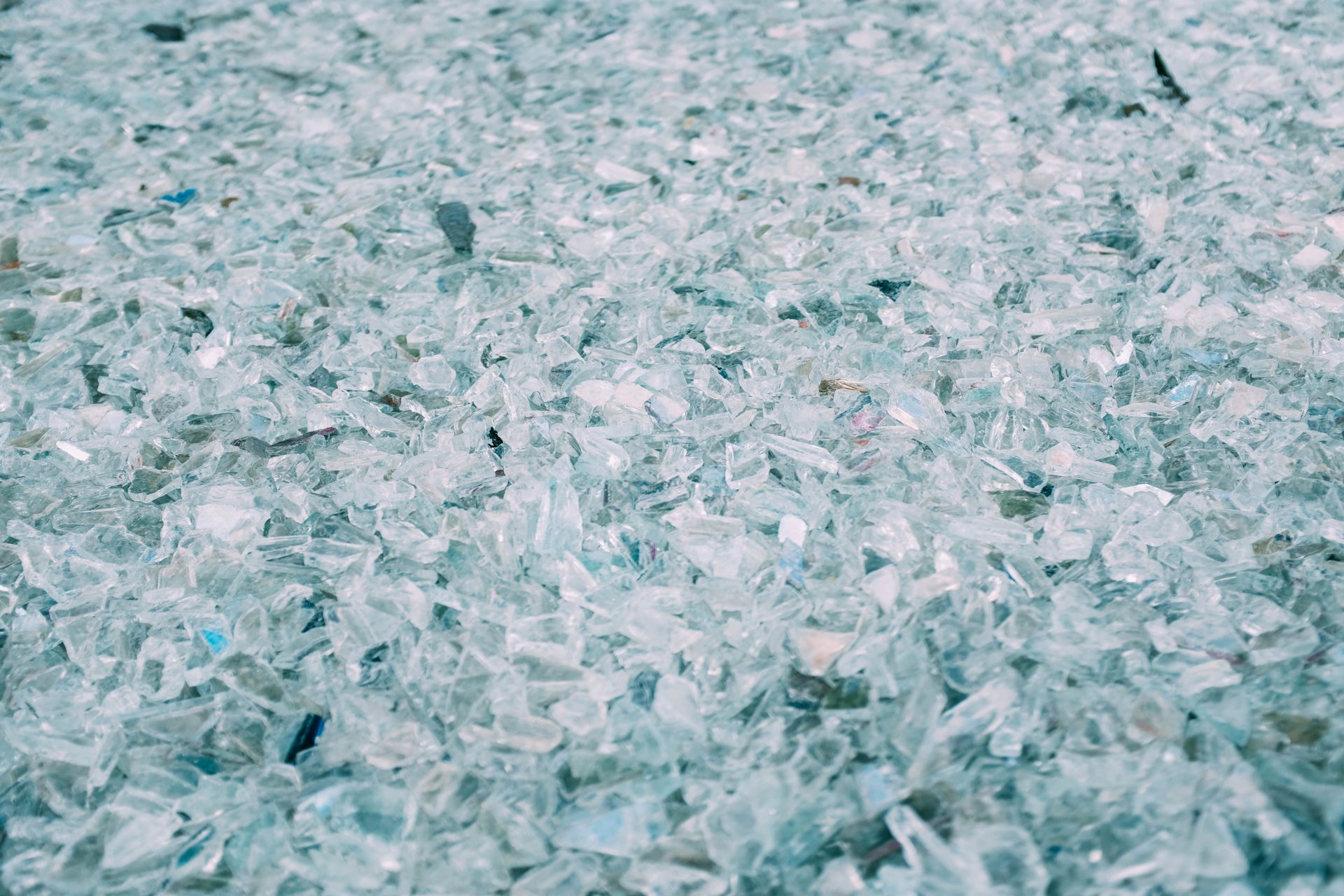
Yes, but it needs a bit more care than intact glass. Broken glass carries a real risk of injury to anyone handling the skip, so never tip loose shards straight in. Wrap smaller broken pieces in newspaper, cardboard, or an old sheet, or seal them inside a box, before they go in.
Wearing gloves while you do this and keeping wrapped glass away from the sides of the skip keep the risk to a minimum for you and the collection team.
Can I throw bottles into a skip?
Yes, glass bottles are among the most common items that go into a skip and are accepted without any special arrangements. Where possible, empty bottles fully and put the lids back on before loading them, as this keeps things tidier and reduces spillage.
As with all glass, spread bottles out across the skip rather than dropping them all in one spot, since a skip full of bottles is heavier than it looks. If any bottles are broken, first wrap the pieces using the same precautions as for any other broken glass.
Get The Right Skip For The Job
So, can you put glass in a skip? For almost every household and building job, yes, with a bit of care when loading it. f you are clearing a property in Greater Manchester, or you are not sure whether a specific type of glass is suitable, explore our skip hire in Greater Manchester options or give P.P. O’Connor Skips a call.
We will point you to the right size and answer any questions before the skip arrives.